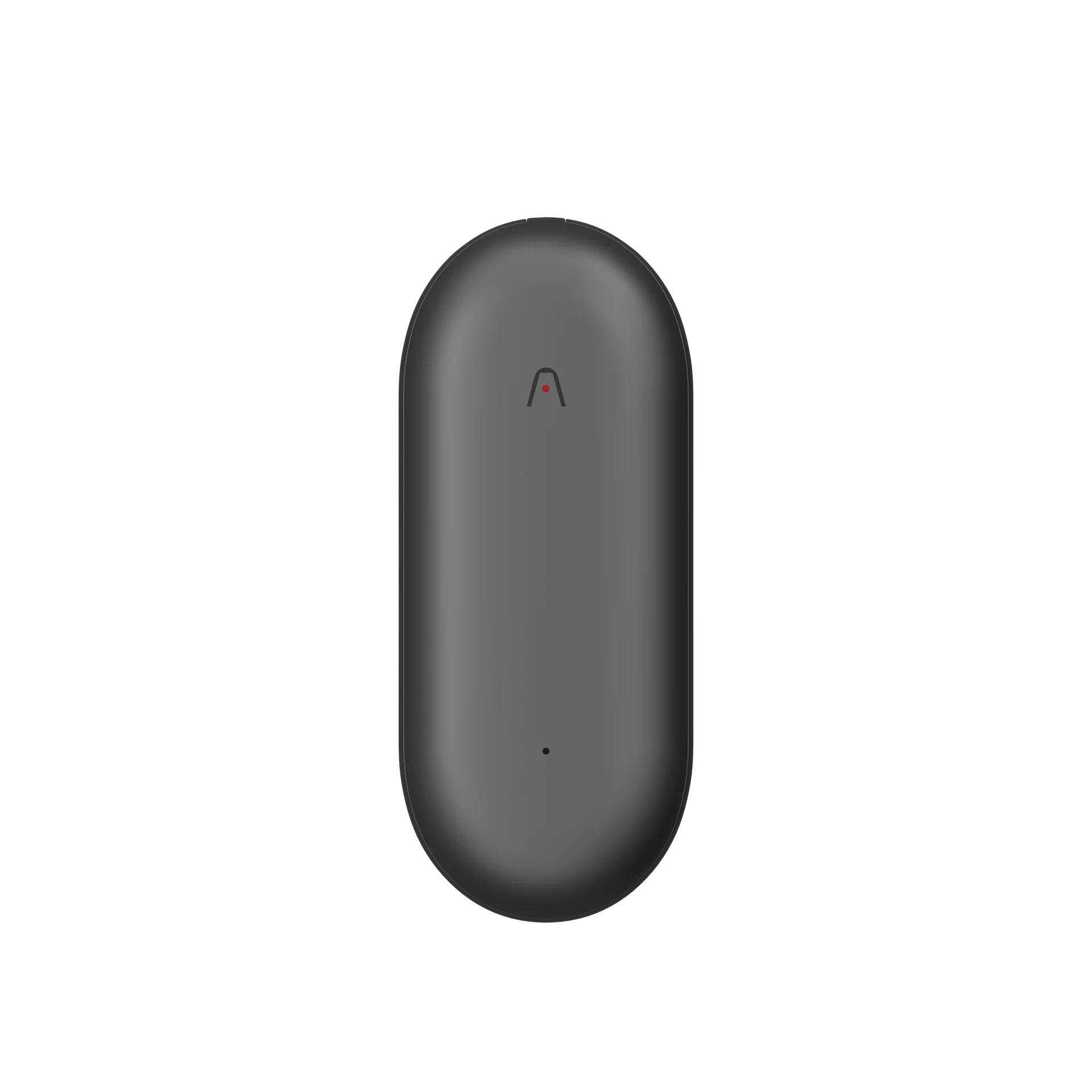

Welcome to this Pocket vs Plaud comparison guide.
Below, we’re going to break down the differences between these two AI note taking devices to help you choose the right one.
Both devices attach to a phone and record with one press, but their pricing and recording hardware differ. Pocket costs $129 on its website and can reach $159 on Amazon. Plaud Note Pro costs $189 and records for up to 30 hours in Enhance mode, up to 50 hours in Endurance mode, or up to 60 days on standby.
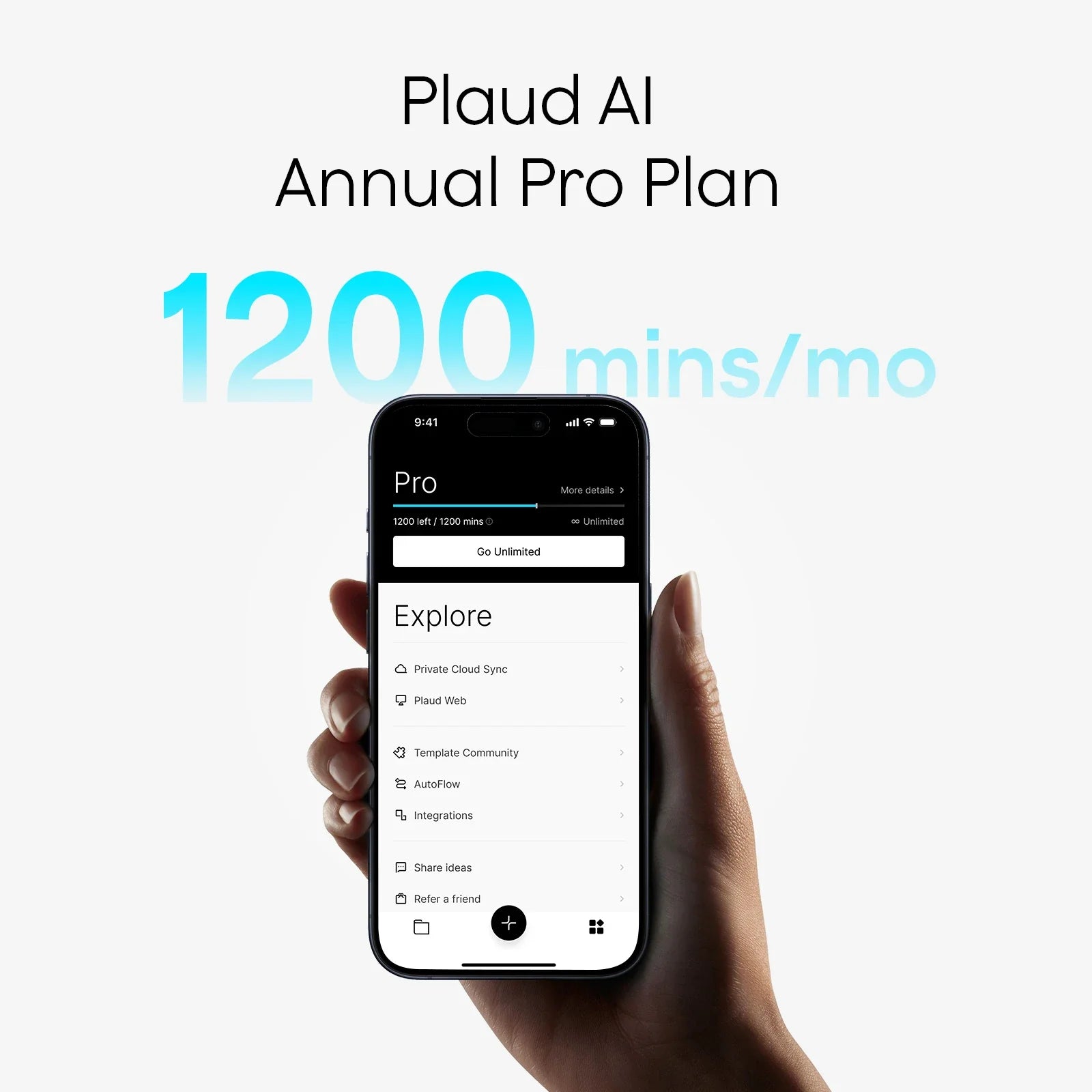
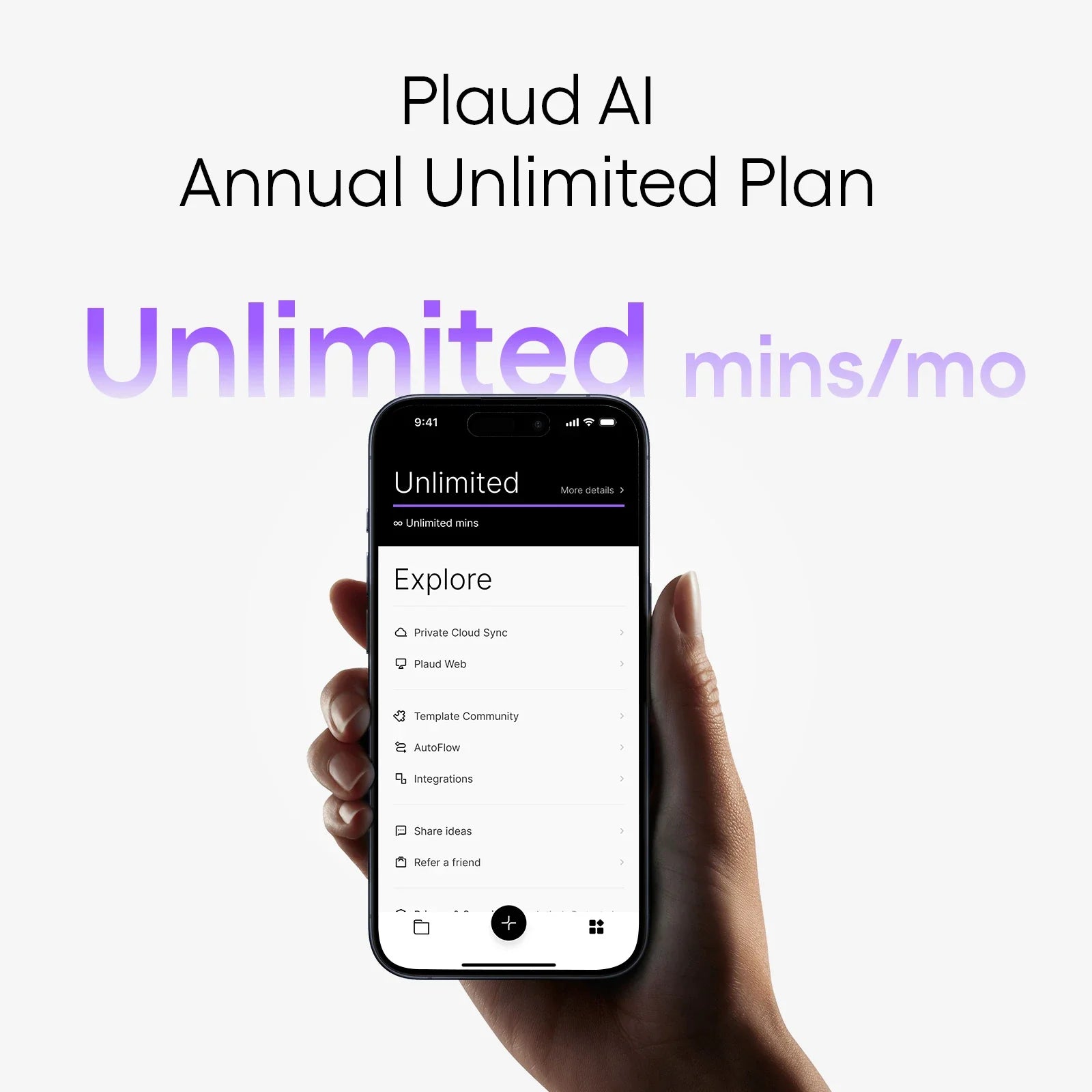
The free plans take different approaches. The Plaud Starter Plan includes 300 transcription minutes per month and the core Plaud Intelligence features. Pocket includes unlimited transcription at standard accuracy, while its highest-accuracy transcription and expanded AI use sit in its paid plan.
Overall, we recommend Plaud Note Pro for people who move between phone calls, one-to-one conversations, and meetings in larger rooms. Its up to 5 m pickup, smart dual-mode recording, physical Highlight control, multimodal inputs, and templates are built for work that continues after the recording.
Pocket remains a practical choice for personal lists, voice notes, and buyers who value unlimited standard-accuracy transcription.
Keep reading to see where each device has the advantage.
Choose by what happens after you press record
Pocket leads on website price and included transcription volume. Plaud Note Pro is the recommended choice for calls, larger rooms, regional language support, and structured professional follow-up.

 Recommended for calls and meetings Plaud Note Pro Team meetings in the room or on a call, with every decision, owner, and date on record. Shop now
Pocket vs Plaud Note Pro: which is the better physical AI note taker?

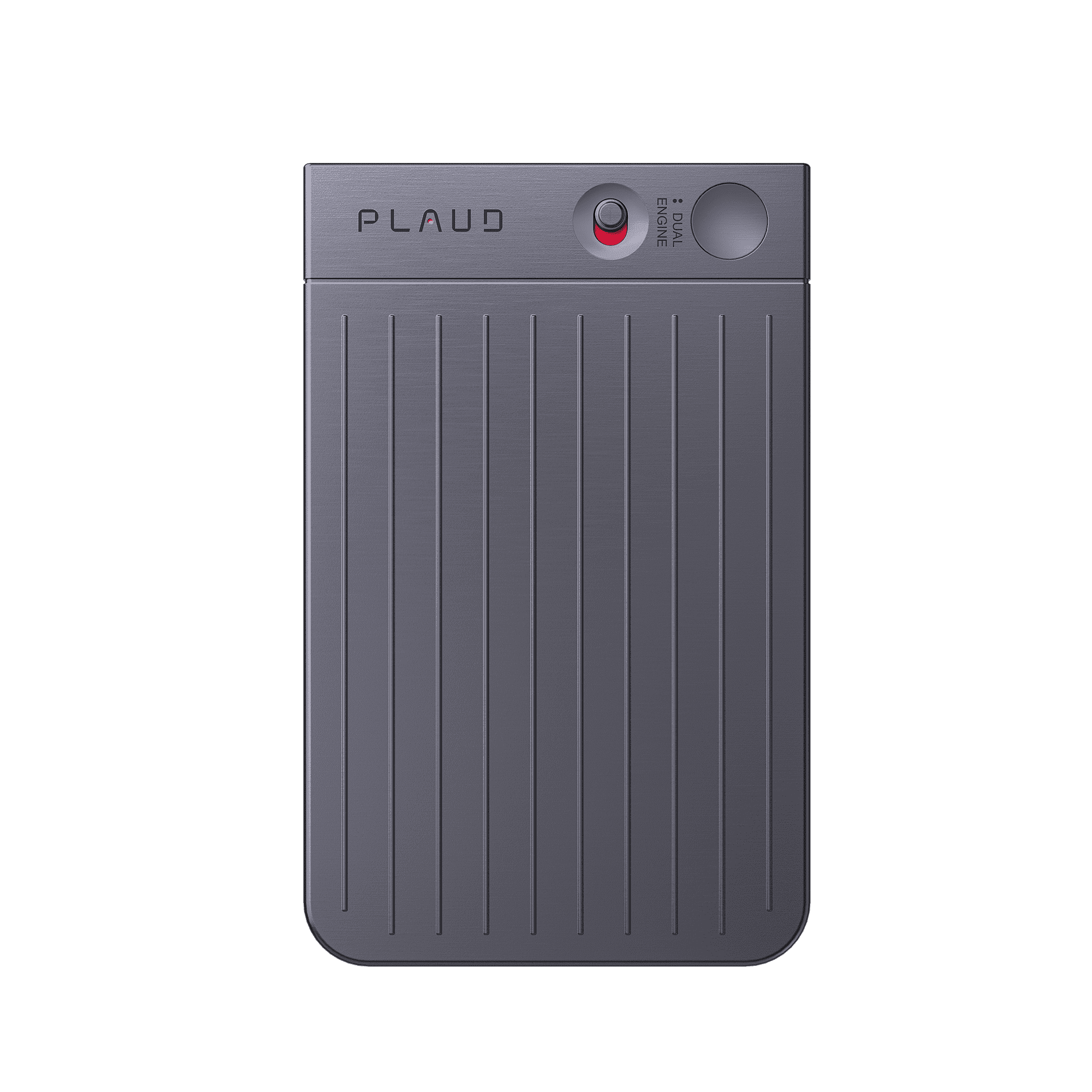
Plaud Note Pro and Pocket are physical recording devices that turn captured audio into transcripts, summaries, and notes. Plaud Note Pro is designed for professional calls and meetings, while Pocket focuses more on personal capture and high-volume standard-accuracy transcription.
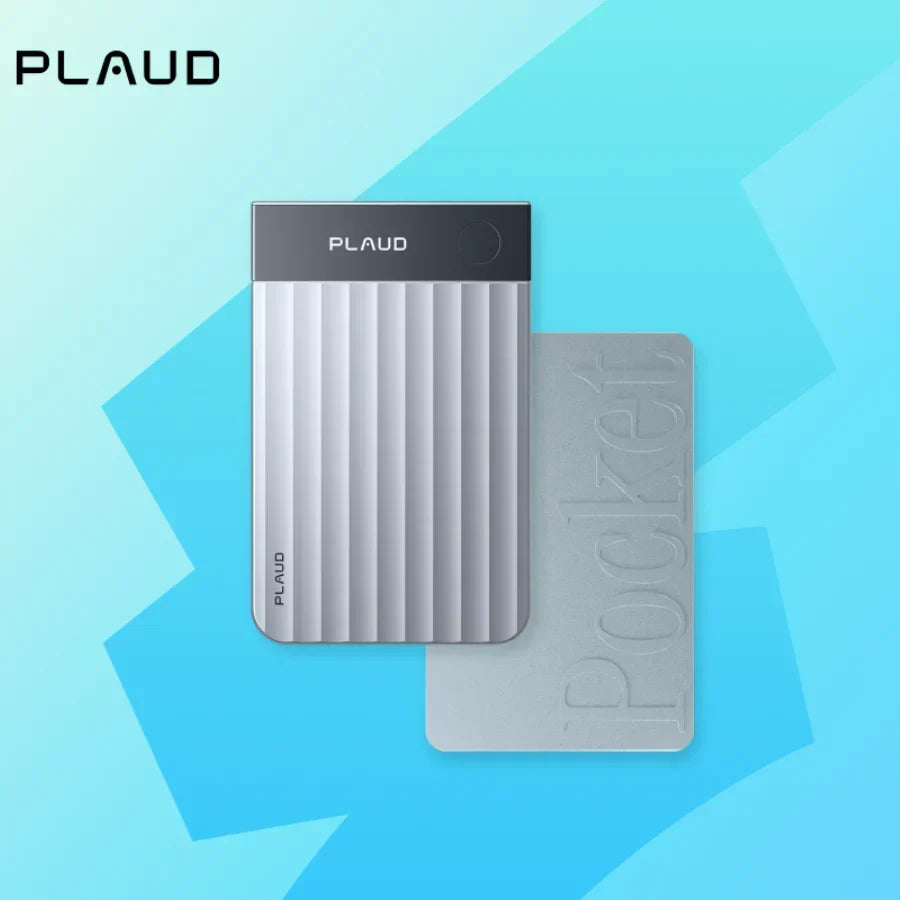
They look similar, but the recording hardware creates a meaningful difference. Plaud Note Pro combines four MEMS microphones with AI-Beamforming and one VCS, with pickup up to 5 m. Pocket uses two studio microphones and one contact microphone.
Plaud Note Pro also gives you an InstantView AMOLED display for checking recording status and a physical Highlight control for marking an important moment while it happens.
Here’s one example of using Plaud Note Pro in a business setting:
You have a meeting with an important client, and several people are seated across a larger room. Plaud Note Pro is built to capture voices from up to 5 m away. When the client confirms a deadline, a short press marks that moment so you can return to the surrounding context during review.
After the meeting, Plaud Intelligence turns the recording into a transcript, summary, and action items that sync across Plaud App, Plaud Web, and Plaud Desktop. Pocket saves free-plan summaries for 30 days, so buyers who need a longer review window should check the current paid-plan terms.
Pocket works well when the main job is capturing and summarizing personal thoughts. Plaud Note Pro better suits a meeting owner who needs to review decisions, share action items, and return to highlighted moments.
Further reading: If you need tips on running meetings, we have a complete guide on the topic.
Feature comparison of Pocket and Plaud Note Pro
Pocket and Plaud are physical recording devices that work without an internet connection. Take a quick look at the differences between Plaud and Pocket in the table below.
|
Feature |
Plaud Note Pro |
|
|
Weight |
1.06 oz |
1.8 oz |
|
Thickness |
0.12 inches |
0.2 inches |
|
Battery |
Up to 30 hours in Enhance mode, up to 50 hours in Endurance mode, and up to 60 days on standby |
Up to four days of use |
|
Storage |
64 GB |
64 GB |
|
Microphones |
4 MEMS microphones with AI-Beamforming and 1 VCS, with pickup up to 5 m |
2 studio microphones and 1 contact microphone |
|
Recording controls |
Smart dual-mode recording, physical Highlight button, and InstantView AMOLED display |
One-button recording with phone-attached capture |
|
Languages |
112+ transcription languages, including Cantonese and Traditional Chinese Minnan/Hokkien |
120+ languages listed for summaries, action items, and mind maps |
|
Included transcription |
300 minutes per month with the Plaud Starter Plan |
Unlimited transcription at standard accuracy |
|
Multimodal inputs |
Yes, including photos, slides, and diagrams added to notes |
No comparable multimodal note input listed |
|
Workflows and templates |
10,000+ templates, including custom templates |
Summary styles vary by plan |
|
Summaries and insights |
Summaries, notes, action items, Ask Plaud, and highlighted moments |
Summaries, mind maps, action items, and Ask Pocket, with limits varying by plan |
|
Published compliance claims |
SOC 2, HIPAA, GDPR, and EN 18031 compliant. ISO 27001 and ISO 27701 certified. |
Verify the current security and enterprise controls required by your organization |
|
Hardware price |
$189 |
$129 on Pocket’s website. Up to $159 on Amazon. |
Plaud Note Pro vs Pocket AI: complete review
Let’s look at Plaud Note Pro and Pocket to see what makes each device stand out.
What is Plaud Note Pro?

Plaud Note Pro is a physical AI note taker designed for phone calls, in-person conversations, and larger meeting rooms. Four MEMS microphones with AI-Beamforming capture voices up to 5 m away, while one VCS handles phone-call audio.
The InstantView AMOLED display confirms recording status without opening the Plaud App. When a speaker reaches an important decision, a short press on the Highlight button marks that moment for review.
After recording, Plaud Intelligence turns the audio into searchable transcripts, summaries, and action items. The files sync across Plaud App, Plaud Web, and Plaud Desktop.
Plaud Note Pro supports 112+ transcription languages. For HK, TW, SG, and MY, relevant options include Cantonese, Traditional Chinese Minnan/Hokkien, Singapore English, Malay, and Tamil. One language is selected for each recording.
It costs more than Pocket, but the additional hardware is relevant when room coverage, recording controls, and structured follow-up affect the decision.
Why we like Plaud Note Pro:
- Up to 5 m voice pickup with four MEMS microphones and AI-Beamforming
- Smart dual-mode recording for phone calls and in-person conversations
- InstantView AMOLED display and physical Highlight button
- Automated summaries and notes, plus workflows with 10,000+ templates
- Up to 50 hours of continuous recording in Endurance mode and up to 60 days on standby
- 112+ transcription languages, including local options for HK, TW, SG, and MY
- Plaud Starter Plan with 300 transcription minutes per month and the core Plaud Intelligence features
Plaud Note Pro cons:
- Higher hardware price than Pocket
- Only 300 transcription minutes per month in the Plaud Starter Plan
- You need to sync with the Plaud App before using Plaud Intelligence features
What is Pocket?

Pocket is an AI note taking device focused on capturing voice memos, ideas, and short conversations, then turning them into summaries or action points. Recordings are called “memories” in the Pocket app.
Pocket includes unlimited transcription at standard accuracy, along with summaries and mind maps on the free plan. Its highest-accuracy transcription and expanded AI use belong to the paid plan.
Free-plan summaries are saved for 30 days. Buyers who need a longer review window should check Pocket’s current paid-plan terms.
What we like about Pocket:
- Lower website price
- 64 GB device storage
- Unlimited transcription at standard accuracy
- Useful for quick notes and personal organization
Pocket cons:
- Highest-accuracy transcription and some expanded AI use require a paid plan
- Shorter published battery duration
- Less room-focused hardware than Plaud Note Pro
AI voice recording and note-taking features compared
Below, we compare Plaud Note Pro and Pocket feature by feature, while separating verified specifications from plan-dependent claims.
Pocket leads on website price and included transcription volume. Plaud Note Pro costs more but adds room-focused microphones, recording controls, and a broader professional workflow.
AI note-taking features
Winner: Plaud Note Pro for structured professional follow-up
Plaud Note Pro records calls and in-person conversations, then turns the audio into structured summaries and action items. The Highlight button marks a decision while it happens, and the InstantView AMOLED display confirms recording status.
You can also add screenshots, presentation slides, and other visual context to Plaud notes. Templates then organize the result for the task, including meeting notes and follow-up actions.
Pocket also creates summaries, action items, and mind maps. The choice depends on whether you value Pocket’s unlimited standard-accuracy transcription or Plaud Note Pro’s capture hardware and professional workflow.
Call recording
Winner: Tie for basic phone-attached capture
Both devices support phone-attached call recording. Plaud Note Pro uses smart dual-mode recording with one VCS, while Pocket uses a contact microphone.
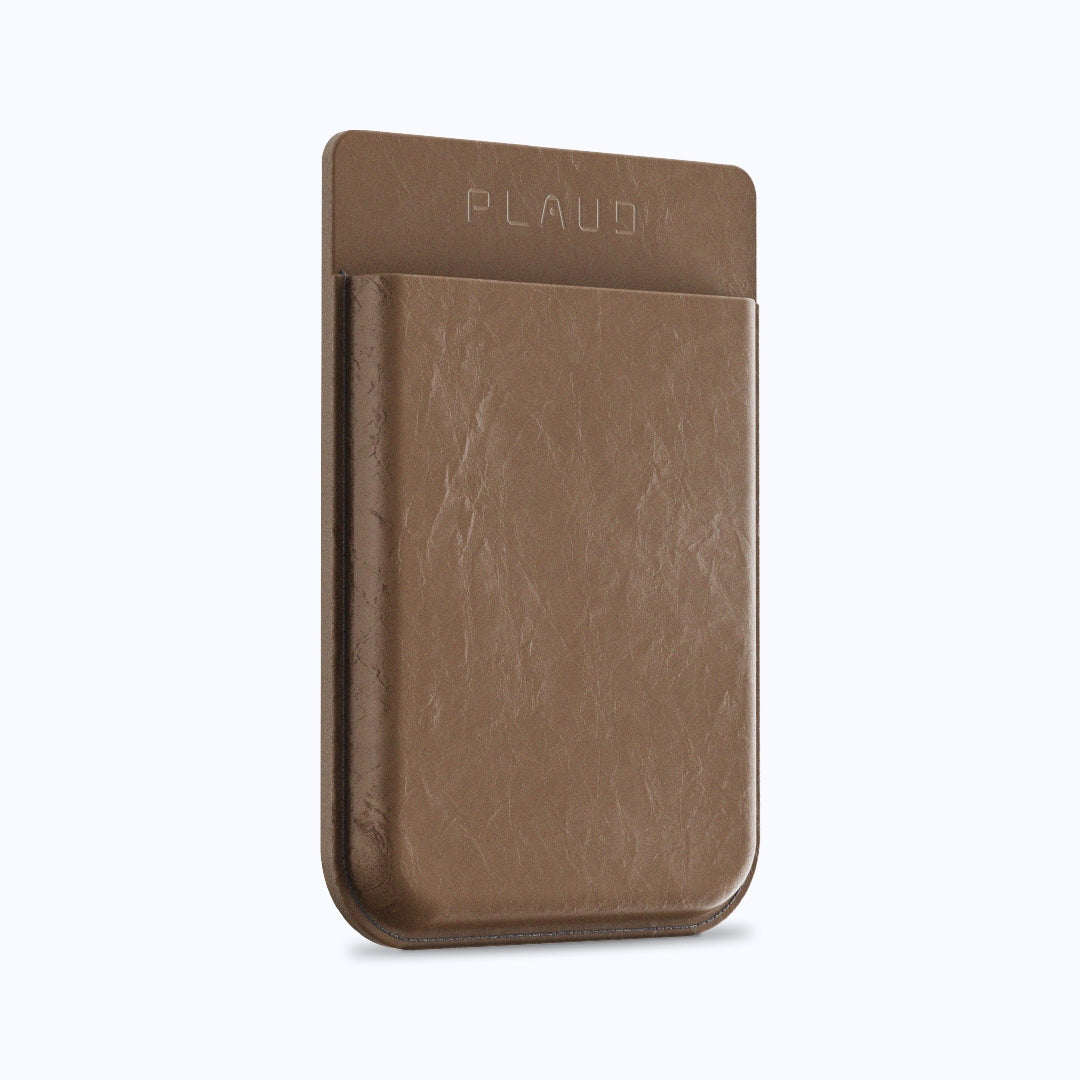
Plaud Note Pro automatically detects phone calls and in-person conversations, so the user does not need to move a manual mode switch. Both products include a magnetic case for phone attachment.
Warning: Review the recording laws in your state or jurisdiction and obtain the required participant consent before recording.
Summarization and transcription
Winner: It depends on volume and workflow
Pocket includes unlimited transcription at standard accuracy. Plaud Note Pro includes 300 transcription minutes per month and supports 112+ transcription languages, including Cantonese and Traditional Chinese Minnan/Hokkien.
For HK, TW, SG, and MY readers, Plaud’s list also includes Singapore English, Malay, Tamil, and several Mandarin variants. One transcription language is selected for each recording.

Pocket’s highest-accuracy transcription belongs to the paid plan, so buyers should compare a sample recorded in their main language and room. Plaud paid plans primarily add transcription capacity beyond the Plaud Starter Plan’s 300 monthly minutes.
Privacy and security
Winner: Plaud Note Pro
Plaud publishes a broader set of named security and privacy controls for organizational review. Plaud is SOC 2, HIPAA, GDPR, and EN 18031 compliant, and holds ISO 27001 and ISO 27701 certifications.
Pocket also publishes security and enterprise information, but buyers in healthcare, legal, finance, or other regulated work should verify the controls, contract terms, and data-handling options required by their organization.
Audio quality
Winner: Plaud Note Pro for larger rooms
Both devices record audio, but Plaud Note Pro is built for more demanding rooms. Four MEMS microphones with AI-Beamforming capture voices up to 5 m away, while Pocket’s microphones favor closer placement.
Pocket remains suitable for voice memos, personal ideas, and conversations where the device stays near the speaker.
Pricing
Winner: Pocket on hardware price
Pocket costs $129 on its website, which is $60 below the $189 Plaud Note Pro price. Pocket can reach $159 on Amazon, narrowing the difference to $30.
Pocket includes unlimited transcription at standard accuracy. Plaud Note Pro includes 300 minutes each month through the Plaud Starter Plan, with paid Plaud plans adding more transcription capacity.
Shipping by region
Pocket’s official community says completed devices are handed to its logistics partner in Hong Kong. Plaud publishes regional estimates, including one to two business days of processing and approximately three to five business days for Australian delivery.
Pocket enters the logistics network through Hong Kong. Plaud AU publishes a regional delivery estimate of about three to five business days after processing.
Pocket uses its Hong Kong logistics route. Confirm Plaud’s current local-stock origin and delivery estimate with regional operations before publication.
Use the current destination-store or checkout estimate, and confirm warehouse origin, duties, and remote-area delivery.
Editorial note: The supplied Trustpilot analysis was not accessible during this revision. Add a statement about recurring Pocket shipping complaints only after the sample size, review period, and complaint count can be cited.
Reputation
Winner: Plaud
Plaud has a much stronger track record. But to be fair, it has been around longer than Pocket.
Plaud is used by more than 3 million professionals across 170+ countries, and has thousands of public reviews across marketplaces and communities.
Plaud’s scale and security record
Plaud’s current company materials report adoption across millions of users and more than 170 countries. Its Trust Center also names the standards available for organizations that need a documented security review.
Best
inventions
2026
A product-specific award, not a Plaud Note Pro claim
Plaud NotePin S was named one of TIME’s Best Inventions of 2026 in the Consumer Electronics category. This recognition supports Plaud’s broader product record, but it should not be presented as an award won by Plaud Note Pro.
Pocket is newer than Plaud and continues to build its customer and review record. Compare recent reviews by market and purchase channel rather than treating product age alone as a quality measure.
Are there alternatives to Plaud Note Pro and Pocket?
Plaud isn’t the only option out there, and it’s not the cheapest option either. If you just need basic notes or you’re experimenting with AI note-taking for the first time, a simpler solution might make more sense. Here are a few alternatives worth exploring, depending on your needs.
Some alternatives to Plaud and Pocket include:
- Limitless: A wearable pendant with recording capabilities. Plaud has more features for business, as you can see in this comparison article. However, it was just acquired by Meta, so it's not being sold.
- Omi: Omi is a budget-friendly AI wearable for capturing quick thoughts and summarizing conversations. It’s fine for casual note-taking, but it doesn’t offer the same depth of templates, organization, or long-term workflows as Plaud (for a wearable Plaud device that clips to your wristband or shirt pocket, check out Plaud NotePin).
- Otter.ai: Otter is a software-only AI note-taker. It’s a very popular option for recording online meetings. It works well with Zoom and Google Meet, but it’s not built for in-person conversations or in-person recording. There are other ways to record Zoom meetings or Google Meet meetings as well that you could try. You can even record MS Teams meetings with some built-in apps if you want to give that a try. You might not even need software.
- REcolx: REcolx is another hardware-based AI voice recorder focused on basic transcription, key takeaways, and analysis. It’s good at recording in noisy environments, but it doesn’t have as many features as Plaud.
- Chimenote: Chimenote is an AI voice recorder and real-time translator. It’s a more complex and expensive option than Plaud or Pocket, but if you need a basic translator as well as a note taker, this tool might be helpful.
- Fireflies: One of the most popular tools for summarizing meetings and providing transcripts. But it's not capable of recording in-person meetings and doesn't deliver the same quality as Plaud. You can read our full comparison here.
The verdict: Plaud Note Pro vs Pocket
Pocket remains the lower-cost choice. It costs $129 on its website, can reach $159 on Amazon, and includes unlimited transcription at standard accuracy.
Plaud Note Pro costs $189 and is the recommendation for people who move between phone calls, one-to-one conversations, and larger meeting rooms. Its smart dual-mode recording, up to 5 m pickup, InstantView AMOLED display, physical Highlight control, 112+ transcription languages, and Plaud Intelligence workflow justify the higher hardware price when a recording supports client or team work.
- Choose Pocket if unlimited standard-accuracy transcription and the lowest website price are your main priorities.
- Choose Plaud Note Pro if you need one physical AI note taker for calls and meetings, especially when room coverage, regional language support, structured follow-up, and documented security controls affect the decision.
Before buying either device, record a consented sample in the language and room you use most. Compare the transcript, summary, action items, processing time, and first-year cost.